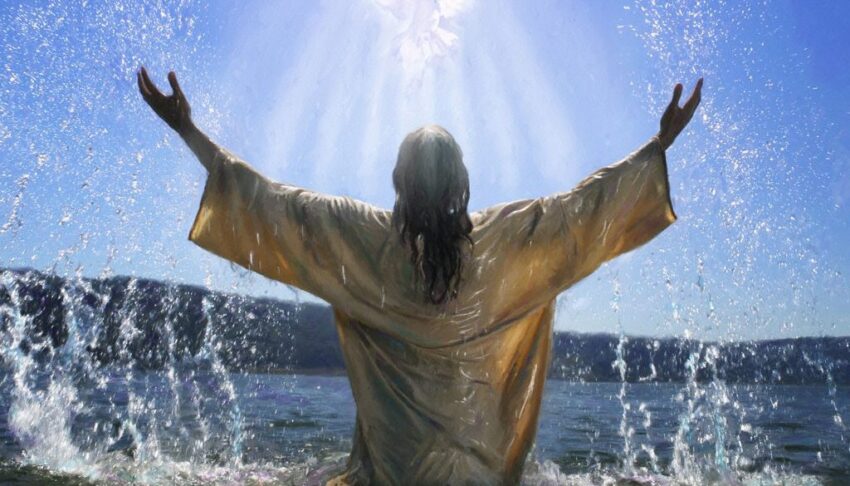
- The doctrine of Trinity has been described as the grammar of Christian faith. It enables us to speak rightly about God, who is revealed as Father, Son and Holy Spirit. The purpose of the grammar is not comprehension or communication but communion with God and becoming participants of the divine nature (2 Peter 1:4). This participation does not mean that we lost our personal identity nor our human nature becomes divine.
- Christians can’t articulate an understanding of the Trinity, yet they grasp it intuitively. We need to be able to articulate it to certain degree in order to fathom the richness and depth of Christian understanding of God and to be able to communicate it to others.
- In the story of Jesus reinstating Peter , Jesus asked and commanded him three times. The question focused on Peter’s relationship with Christ and the command focused on His work for Christ.
- The 7 characteristics of Trinity apply to both our relationship and our work for God.
- The 7 characteristics are Relational Personhood, Joyful Intimacy, Glad Surrender, Complex Simplicity, Gracious Self-Acceptance, Mutual Indwelling and Passionate Mission
- We often forget whose ministry that we do. Although we desire to serve Christ and often ask Him for help, we assume that it’s our ministry and we are the principal actors. What we do is ask Christ to join us in our ministry. Genuine Ministry is participating with Christ in His ongoing ministry.
- Luke conveys the Christ-centered understanding of ministry. Acts 1:1 “all that Jesus began to do and to teach” using the imperfect Greek verb tense (ongoing action) rather than aorist tense (completed action). Luke implies that Christ’s earthly ministry did not end with His death, resurrection and ascension to God’s right hand. The book of Acts is the ongoing ministry of Jesus through His Apostles. The ministry we have entered is meant to be an extension of His.
- All authentic Christian ministry participates in Christ’s ongoing ministry. Ministry is essentially about our joining Christ in His ministry, not His joining us in ours. Stress and burnout is the direct result of our failure to grasp the foundational truth about ministry.
- The understanding of whose ministry can be tremendously liberating. Jesus said, “My yoke is easy, and my burden is light.” It applies to the yoke of ministry, too. Despite all the demands and pressures, we will experience freedom, rest, and joy, knowing that the outcome ultimately depends on Christ, not us. We often tempted to take the burden of ministry on ourselves.
- Jesus the overshepherd of our shepherding. What Christ is doing through the pastors that counts.
- If the ministry we have entered is the ministry of Jesus Christ, then like His, ours will be directed primarily to the Father for the sake of the church and the world, not to the needs or demands of those around us nor directed to the church and the world for the sake of the Father.
- The difference is subtle yet sublime and has profound implications for our life and work.
- In the story of healing of a man at the pool of Bethesda, Jesus only healed one man. If human need dictate his agenda, Jesus would heal many more. If religious leaders dictated, Jesus would heal no one because it was Sabbath. The similar pattern was in the case of Lazarus. The love for Lazarus and the desperate plea from Mary and Martha did not set the agenda of the ministry of Jesus.
- John 5:20 Out of the Father and Son’s relation of mutual love for one another, Christ’s ministry flows. The same to hold true for us. Temptation in ministry is to want to do things for God without cultivating our relationship with God.
- There is a profound difference between doing things for God and doing what God tells us to do. Discerning does not mainly through mystical illumination but in the context of the circumstances and events unfolding us.
- For only through the Holy Spirit we can discover what the Father is doing and accomplish what God wants us to do. Only through the Holy Spirit’s directing and empowering us can we fulfill our calling.
- What does it mean to be filled with the Holy Spirit? It is not filling us like water filling cups. It describes a personal relationship with the Holy Spirit characterized by surrender and abandonment to the Spirit. The Holy Spirit is present in all believers, in some he is not preeminent. The Holy Spirit is resident in all believers, in some he is not president.
- The ministry in the image of God is the ministry of Jesus Christ, to the Father, through the Holy Spirit, for the sake of the Church and the world.
- If you rely on training, you accomplish what training can do. If you rely on skills and hard work, you obtain results that skills and hard work can do. When you rely on committees, you get what committees can do. But you rely on God, you get what God can do. – Wesley Duewel
- The ministry in the image of God we are called is the ministry of Jesus Christ, to the Father and through the Holy Spirit.